
Bunion
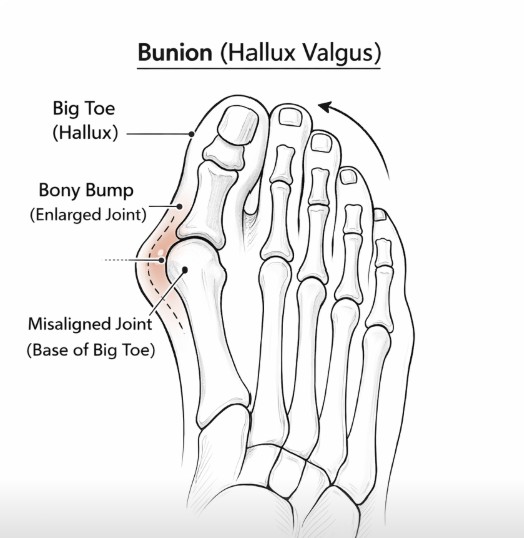
A bunion (medical term: hallux valgus) is a structural deformity of the big toe joint where the big toe gradually shifts toward the second toe and the bone at the base of
the big toe becomes prominent on the inside of the foot.
This change in alignment affects the bones, ligaments, and muscles of the forefoot. Over time, the joint may become inflamed, stiff, and painful.
A bunion is not just a bony lump — it is a progressive change in the position of the
joint and surrounding soft tissues.
Treatment Options
- Footwear modification (wide toe-box shoes, low heels)
- Padding or protective dressings to reduce pressure
- Orthotics or insoles to improve foot mechanics
- Activity modification
- Anti-inflammatory strategies (if appropriate)
- Exercises to maintain joint mobility and strength
These treatments aim to reduce pain and slow progression but do not reverse the deformity.
Surgery may be considered when:
- Pain persists despite appropriate non-surgical treatment
- Daily activities or footwear are significantly limited
- The deformity continues to worsen
What causes a bunion?
Bunions develop due to a combination of factors, including:
- Inherited foot shape and biomechanics
- Flat feet or unstable joints
- Abnormal walking patterns
- Tight, narrow, or poorly fitting footwear
- High-heeled shoes that increase pressure on the big toe joint
- Certain forms of arthritis
- Previous injury or trauma to the big toe joint
Who gets bunions?
Bunions are common and may affect:
- Adults and adolescents
- Women more often than men
- People with a family history of bunions
- People who spend long periods standing or walking
- Athletes and active individuals
Ready to Take the Next Step?
Whether you need a consultation or are ready for treatment, we’re here to help you get back on your feet.